spacer
Dalhousie University Dalhousie University Faculty of Medicine Department of Medicine spacer
Contact
spacer
   
 
spacer


DIVISION OF INFECTIOUS DISEASES

Division Description
Clinical Programs and their Locations
Education
Research
Faculty

Division members have academic appointments at Dalhousie University and are actively involved in education at all levels and for both medical and other health professionals. Royal College accredited sub-specialty training is available, with the opportunity to do combined ID/Medical Microbiology. Dr. Haase (473-8477) is the Divisional undergraduate education coordinator and Dr. Hatchette (473-6885) the Director of the subspecialty training programs in Infectious Diseases and Medical Microbiology.

Undergraduate
Division members participate in a variety of educational activities at the undergraduate level. These range from clinical bedside teaching to lecturing in several of the COPS (Case Oriented Problem Stimulated) units. The Division accepts first and second year medical students for electives. This usually involves attending clinic or consultation rounds ½ day/week (during the allotted elective time) and completion of a project. Many medical students choose to do an ID rotation as an elective during clerkship. During this rotation, the clerk functions as a full member of the team, seeing patients in consultation in the hospital and outpatient settings and reviewing them with the attending staff and other team members. See the Postgraduate section below for a more detailed description of the educational program.

Postgraduate
The ID clinical service is divided into the HI (HI, AJL, VMB) and VG (VG, Rehab, IWK) rotations. Undergraduate and postgraduate trainees are assigned to one of the two services for their 4 week rotation. The VG site tends to see infections in immunocompromised patients (hematopoietic stem cell and solid organ transplants, oncology, end-stage liver and renal disease, and critical care), and infections after gastrointestinal surgery. Trainees on the VG service spend mornings in clinic seeing new outpatient consultations and afternoons seeing the inpatients. The HI site sees patients with severe community- (e.g.: meningitis, encephalitis, endocarditis, sepsis, rapidly progressive pneumonia) and hospital- (e.g.: pneumonia, wound, device-related) acquired infections, in consultation both on the ward and in the emergency room. Trainees initially see the patients on their own and then review them formally on rounds with the team. They thus have the opportunity to learn first hand how to manage common, uncommon, simple, and complex infectious disease problems. The Division is committed to teaching around every patient seen on rounds, taking advantage of the greatest teaching tool: the clinical experience.

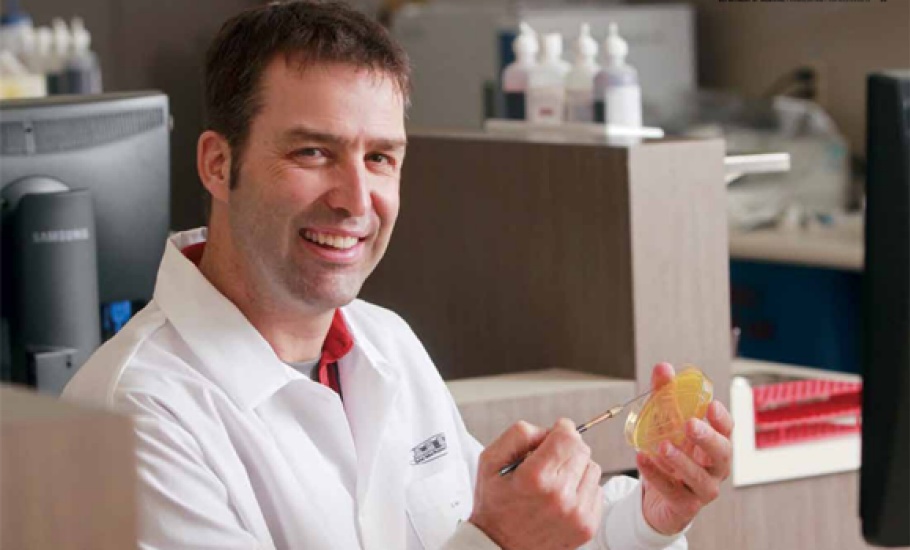
In addition to the clinical teaching rounds, there are a number of other formal and informal teaching sessions. Once weekly there is the interesting cases rounds. Trainees present cases (as unknowns) they have seen to the attending staff and get to experience problem solving in action in an interactive setting! The case presentation is often followed by a brief didactic session related to the case that is presented by the housestaff. There is a once weekly morbidity and mortality rounds, journal club, or state-of-the art lecture. Additionally, there is a weekly plate rounds where a variety of clinical specimens are examined in the microbiology laboratory. Attending staff review learning exams with trainees twice weekly and there is a teaching session on antimicrobial agents. As time allows, attending staff schedule other informal teaching sessions to review topics relevant to the trainees’ career interests.

Rotation specific objectives have been developed for the postgraduate trainees.

We only accept residents who have done their core internal medicine program in Canada and only train in a combined microbiology/infectious disease model.

Infectious Diseases Residency Training Program
Dalhousie University has the only ID Residency Training Program in Atlantic Canada.

Medical Microbiology Residency Training Program
http://microbiology.medicine.dal.ca/people/forward/kf_train.htm

Continuing Medical Education
The Division has been a regular contributor to CME and on two occasions has been awarded the Lea Steeves Award by Dalhousie University for excellence in continuing medical education. Members participate in the community hospital program and CMEs by videoconferencing, having been one of the pioneers of videoconferencing almost 10 years ago when it did a program to community physicians on managing the HIV infected patient. The Division held a very successful ID CME for family physicians in October 2005 and again in 2007 and plans to have its third on one in October 2010. For more information regarding our CME activities, contact Marsha Bennett (473-8477).

Community
Physician and non-physician members of the Division have lectured to a variety of community groups, primarily on HIV, new and emerging infections, and infections in the acute and long term care settings.